
 By
By 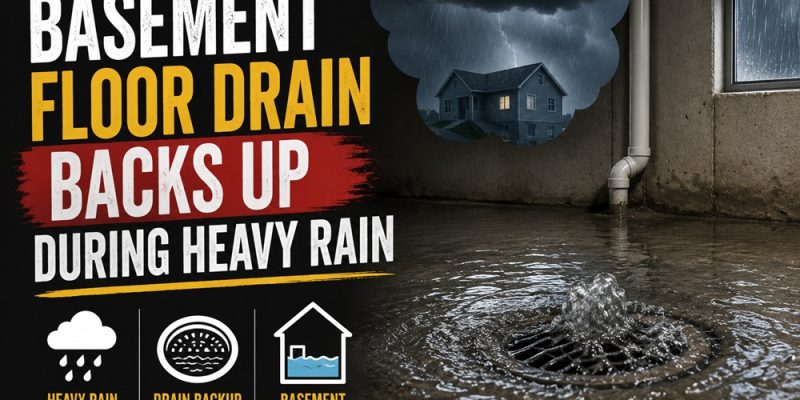
Few basement problems are as alarming as dirty water rising up through the floor drain while it pours outside. It is messy, it can be a health hazard, and it tends to strike during the worst storms. The good news is that the cause is usually well understood and the fixes are proven. The key is to correctly identify why your drain backs up, because the right solution for a sewer surcharge is completely different from the right solution for a clog or for groundwater. This guide walks through how to read the symptoms and which fixes actually hold up over time.
Stop and read this first
If water is actively rising through the drain, stop using all water in the house — no toilets, sinks, showers, or laundry. Every drop you send down has to go somewhere, and right now that somewhere is your basement floor. Then figure out the cause before you clean up, because the cause decides the fix. Treat any backed-up water as contaminated: keep children and pets away, wear gloves and boots, and ventilate the area.
Why it backs up when it rains
Your floor drain sits at the lowest point of the plumbing and ties into the main sewer lateral that carries waste out to the city main. In dry weather, flow runs one way — away from the house. During heavy rain, two things can reverse that:
- Combined sewers. Many older cities run stormwater and sewage in one pipe. The EPA estimates about 700 U.S. municipalities still use combined sewer systems that can overflow in wet weather. When the pipe fills, the mix backs up into the lowest connected drains.
- Sanitary sewer surcharge. Even separated systems can be overwhelmed; the EPA estimates 23,000–75,000 sanitary sewer overflows occur every year, many during major rain. Pressure in the main forces water backward through your lateral.
A useful test: if your basement floods only during heavy rain and never otherwise, a sewer-system overload is the most likely culprit. If it backs up after you run a lot of water indoors — a load of laundry, several showers — suspect a main-line blockage instead. And if water seems to seep up around the drain rather than surge out of it, you may be dealing with groundwater that is outpacing a gravity drain. Each of these points to a different fix.
Match the symptom to the cause
| What you observe | Likely cause | Fix |
| Backs up only in heavy rain; multiple drains affected | Combined sewer / sanitary surcharge | Backwater valve; disconnect downspouts; route storm to sump |
| Backs up after heavy indoor water use | Main sewer-line clog (grease, wipes, roots) | Hydro-jet or snake the line |
| Single drain slow, sewage smell, debris | Local trap or branch clog | Clear the trap/branch; clean the drain |
| Water pooling around drain, no clog, only after storms | Drain relies on gravity; groundwater outpaces it | Add a sump pump to actively move water out |
| Recurring root intrusion every year | Tree roots in the lateral | Annual root cutting; camera inspection; spot repair |
If you cannot tell which pattern you have, a plumber’s camera inspection of the lateral is the fastest way to know for certain whether you are fighting a surcharge, a clog, or roots. It is money well spent before you commit to a fix.
The fixes that actually hold
1. Install a backwater valve
A backwater (backflow) valve is a one-way gate in the sanitary line: water flows out toward the sewer, but if the city main surcharges, the valve snaps shut and blocks the reverse flow. It is the single most effective defense against rain-driven sewage backups, typically $800–$1,500 installed — and some cities offer subsidies (Toronto, for example, covers up to about $1,250). Where you have a combined sewer, a backwater valve on the sanitary line plus moving stormwater to a sump is the most robust combination. The valve does need occasional inspection and cleaning so debris does not hold the flapper open, but that maintenance is trivial compared with a flooded basement.
2. Take the storm load off the sanitary sewer
Disconnect roof downspouts and yard drains from the sanitary sewer and redirect that water to your lawn or a storm drain. Less stormwater entering the system means less chance of a surcharge backing into your home — some municipalities now make downspout disconnection mandatory for this reason. Re-grade so soil slopes away from the foundation at least 6 inches over 10 feet, and keep gutters clean so the roof water you are trying to redirect actually goes where you intend.
3. Use a sump system for groundwater
Many older basements have a floor drain that relies only on gravity and the city sewer. When groundwater rises faster than gravity can carry it away, the drain becomes a one-way entrance for water. A sump basin and pump actively collect groundwater and push it out and away — add a check valve on the discharge so pumped water can’t flow back into the pit. In a storm-prone area, pair the sump with a battery backup so it keeps working when the power goes out, which is exactly when you need it most.
Why sealing the drain is the wrong move
It is tempting to cap or seal the drain, but if the backup is sewer surcharge, sealing one opening just sends the pressurized water to the next lowest fixture — a shower, laundry standpipe, or utility sink. You have not stopped the water; you have only moved the flood. The goal is to control where the water goes (a valve plus a sump), not to plug a single hole and hope. A capped drain under surcharge pressure can also blow its cap or seal off entirely, leaving you worse off than before.
When to call a professional
Some of this is DIY-friendly — disconnecting downspouts, regrading, cleaning gutters. But a few situations call for a pro: recurring sewage backups, any backwater-valve installation that ties into the main sanitary line, suspected root intrusion, or a backup you simply cannot diagnose. A licensed plumber can camera the line, confirm the cause, and install a valve to code, which also matters if you ever file an insurance claim.










Comments