
 By
By 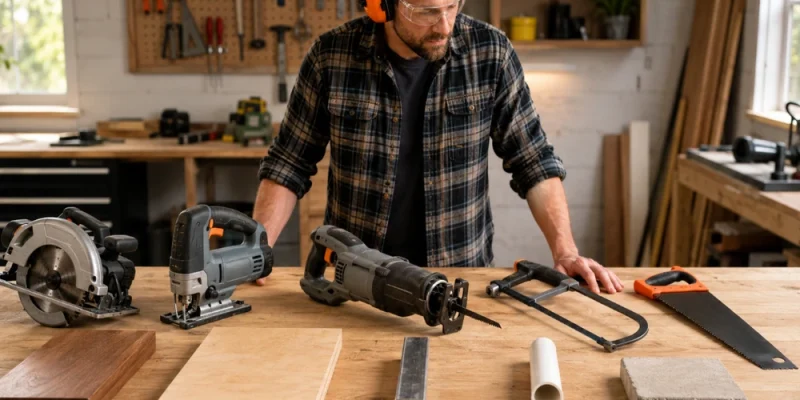
Choosing a saw is not simply a matter of finding one that can cut through the material. The correct saw should also match the shape of the cut, the thickness of the piece, and the finish you want.
The blade matters just as much as the tool. A powerful saw fitted with the wrong blade may produce a rough edge, damage the material, or create a safety hazard. Before beginning a project, identify what you are cutting and how accurate the result needs to be.
Cutting Lumber and Plywood
A circular saw is a practical choice for straight cuts in framing lumber, plywood, and other sheet materials. It is portable and can handle many general construction tasks. Using a straight guide can improve accuracy when cutting large panels.
For repeated crosscuts or angled cuts in boards, a miter saw may be more convenient. It works well for trim, framing pieces, and molding. A table saw is often chosen for long rip cuts made in the same direction as the wood grain.
A handsaw is still useful for smaller jobs where setting up a power tool would take longer than making the cut. It also provides more control in tight spaces.
Blades with fewer, larger teeth generally cut wood faster but leave a rougher edge. Blades with more teeth usually create a smoother finish.
Making Curves and Detailed Cuts
A jigsaw is a common choice for curves, openings, and irregular shapes. It can cut wood, laminate, plastic, and thin metal when fitted with the correct blade.
Because the blade is narrow, it can turn while moving through the material. Tight curves require a narrower blade, while straight cuts may benefit from a wider and more stable one.
A scroll saw is better for delicate patterns and small decorative pieces. It is commonly used for detailed woodworking rather than heavy construction.
Cutting Metal
A hacksaw can cut metal tubing, bolts, brackets, and other small pieces. Its fine-toothed blade removes a small amount of material with each stroke, providing control without producing the speed of a power saw.
For larger or repeated metal cuts, a metal-cutting band saw or a properly equipped chop saw may be suitable. A reciprocating saw with a metal-cutting blade is helpful for demolition, pipes, and pieces that are difficult to move.
Do not place a wood-cutting blade on metal simply because it fits the tool. Metal blades are designed with tooth patterns and materials that can handle harder surfaces. Secure the workpiece and allow the blade to do the cutting rather than forcing it forward.
Cutting Plastic and PVC
Plastic can crack, melt, or chip if the wrong blade or speed is used. A fine-toothed handsaw or hacksaw works well for many PVC pipes and small plastic pieces.
A circular saw or jigsaw may be used on plastic sheets when equipped with an appropriate fine-tooth blade. Support the material on both sides of the cutting line to reduce vibration.
Cut at a steady pace. Moving too slowly may create heat, while pushing too quickly can crack the edge. Testing the setup on a scrap piece is a good idea.
Cutting Tile and Masonry
Ceramic tile, stone, brick, and concrete require blades designed for abrasive materials. A wet tile saw is often used for straight cuts in ceramic, porcelain, and some stone tiles. Water cools the blade and helps control dust.
An angle grinder fitted with an appropriate masonry or diamond blade can make notches and curved cuts. Larger concrete work may require a dedicated masonry saw.
Dust from masonry materials can be harmful. Wet-cutting methods, suitable dust controls, ventilation, and respiratory protection may be needed depending on the work.
Cutting Trim and Finished Materials
A fine-tooth miter-saw blade can produce clean cuts in molding and finished wood. A backsaw used with a miter box offers a simple hand-tool option.
Laminate and veneered panels may chip along the edge. The correct fine-tooth blade, good material support, and careful cutting direction can improve the result. Painter’s tape along the cut line may also reduce minor surface chipping on some materials.
Use Every Saw Safely
Inspect the saw and blade before use. A dull, bent, cracked, or incorrectly installed blade can cause poor cuts and dangerous movement. Keep guards in place, clamp the material securely, and disconnect power before changing a blade.
Eye protection is important for every cutting task. Hearing, breathing, and face protection may also be needed. Loose clothing and jewelry should stay away from moving parts. OSHA’s general guidance also recommends using tools according to their design and keeping guards properly installed.
This post was written by a professional at Anawalt Lumber. Anawalt Lumber is a family-owned lumber yard and hardware store serving Los Angeles for over a century. Known for quality lumber yard Malibu CA, contractor supplies, hardware, and a full-service nursery, Anawalt provides personalized service for homeowners and licensed contractors. From job pricing and bulk discounts to special-order materials with fast delivery, Anawalt is your trusted local building supply partner in Malibu, West LA, and Hollywood.








Comments